
The Problem with Teaching SAT Vocabulary Lists
Mar 03, 2026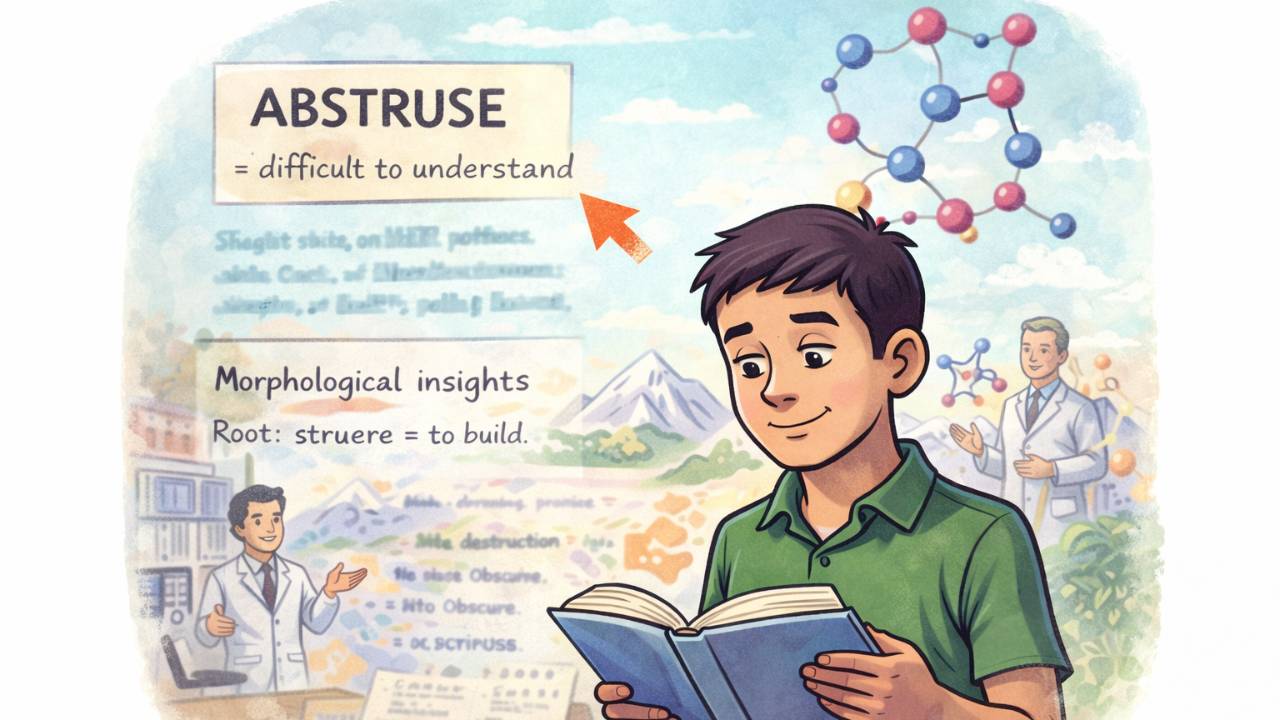
Most SAT preparation programs still operate on a fundamental misconception: that vocabulary acquisition happens through memorizing isolated definitions. Students receive lists of 500 "essential" SAT words, create flashcards, and drill definitions in the weeks before the test. This approach persists despite decades of research showing that students retain less than 20% of words learned through rote memorization after just three months. The real failure runs deeper than poor retention rates. When students memorize "gregarious means sociable," they miss the entire semantic network that makes vocabulary knowledge actually useful for comprehension and reasoning.
The College Board tests approximately 8 vocabulary questions directly through Words in Context items, but vocabulary knowledge affects performance across the entire Reading and Writing section. Students need to understand academic language in science passages, decode complex sentence structures, and recognize subtle shifts in meaning based on context. This requires something memorized definitions cannot provide: the ability to recognize patterns, make connections, and apply morphological knowledge to unfamiliar words. The difference between students who consistently score well on vocabulary items and those who struggle is not the number of words memorized but the depth of their word knowledge and their ability to leverage word families systematically.
Understanding Morphological Awareness in SAT Test Preparation
Morphological awareness represents the ability to recognize and manipulate the meaningful parts of words: prefixes, roots, and suffixes. When students understand that "prediction," "dictator," and "contradict" all share the Latin root "dict" meaning "to say or speak," they gain access to an entire network of related words rather than three isolated definitions. This systematic approach to vocabulary reflects how proficient readers actually process language. Research from vocabulary acquisition studies shows that students who receive explicit morphological instruction demonstrate vocabulary growth rates three times higher than those using traditional memorization methods.
The mental lexicon does not store words as individual units but as morphological families connected through shared meanings and structures. When students encounter "circumnavigate" on the SAT, those trained in morphology immediately recognize "circum" (around) and "navigate" (to sail or travel), allowing them to construct meaning even without prior exposure to the specific word. This generative capacity transforms vocabulary from a memorization task into a problem-solving skill. Students who understand that "bio" means life can decode "biodiversity," "symbiotic," and "antibiotic" through structural analysis rather than relying on memorized definitions that may not transfer to varied contexts.
Best SAT Vocabulary Building Through Word Family Networks
The most effective vocabulary instruction for SAT preparation organizes words into semantic and morphological networks rather than alphabetical lists. Consider the root "ject" meaning "to throw." From this single morpheme, students can understand "reject" (throw back), "project" (throw forward), "inject" (throw in), "eject" (throw out), and "trajectory" (the path of something thrown). Each word becomes comprehensible through its relationship to the core meaning rather than existing as an isolated fact to memorize. This approach mirrors how vocabulary naturally develops through reading: readers encounter word families across multiple contexts and gradually build nuanced understanding of how morphemes combine to create meaning.
Building these networks requires systematic instruction that progresses from transparent morphological relationships to more complex derivations. Students first learn high-frequency prefixes like "un-," "re-," and "dis-" that maintain consistent meanings across contexts. They then advance to roots that appear across academic disciplines: "struct" (build) connects architecture, grammar, and social studies vocabulary; "port" (carry) links transportation, deportation, and portfolio. The goal is not to teach every possible word but to provide students with productive morphemes that generate understanding of hundreds of related terms. This systematic approach creates what researchers call "morphological problem-solving strategies" that students can apply independently when encountering unfamiliar vocabulary.
Top 10 Methods for Teaching Morphological Vocabulary Systems
Effective morphological instruction follows a structured progression that builds from recognition to production. Students begin by identifying morphemes in familiar words, then analyze how meaning changes with different affixes, and finally generate new words using known morphemes. This sequence develops both receptive and productive vocabulary knowledge essential for SAT success.
The morpheme matrix represents one of the most powerful tools for visualizing word family relationships. Students place a base word or root in the center, then systematically add prefixes and suffixes to generate related words. For the root "spect" (to look), students might create: inspect, spectator, perspective, retrospect, and spectacle. This visual representation helps students recognize patterns and understand how meaning shifts with different morphological combinations. The matrix also reveals gaps in knowledge, showing students which combinations are possible versus which violate English morphological rules.
Word generation activities push students beyond recognition to active construction. Given a set of morphemes, students create as many legitimate words as possible, then verify their constructions using context sentences. This process strengthens understanding of morphological constraints: why "un-" can attach to adjectives but not nouns, or why some roots require linking vowels. These activities develop the flexibility needed to decode complex academic vocabulary on the SAR, where familiar morphemes appear in unfamiliar combinations.
SAT Grammar Rules and Morphological Knowledge Integration
Morphological awareness directly supports grammar comprehension, particularly in understanding parts of speech and syntactic relationships. Students who recognize that "-tion" creates nouns, "-ize" creates verbs, and "-ive" creates adjectives can better navigate complex sentence structures on the SAT. This knowledge helps students identify grammatical functions even when encountering unfamiliar words, a critical skill for both the grammar and reading comprehension sections.
The relationship between morphology and grammar extends to understanding parallel structure, one of the most frequently tested concepts on the SAT. When students understand how suffixes determine grammatical categories, they can more easily identify and corrext parallelism errors. For example, recognizing that "contribution", "participation", and "celebration" are all nominalized forms help students maintain consistency in lists and comparisons. This morphological lens makes grammar rules more transparent and memorable than treating each construction as an isolated pattern to memorize.
Digital SAT Practice Test Strategies Using Word Families
The digital SAT format creates new opportunities for applying morphological knowledge strategically. With shorter passages and more focused questions, students can quickly scan for morphological clues that reveal meaning. When encountering a Words in Context question, students should first identify any recognizable morphemes, then use passage context to confirm or refine their understanding. This two-step process leverages both structural and contextual information, increasing accuracy even with partially familiar vocabulary.
Practice with morphological analysis should mirror the cognitive demands of actual test questions. Students need experience recognizing how common words shift meaning through affixation: "conduct" as a verb versus "conductor" as a noun, or how "significant" relates to "signify" and "significance." The best SAT prep materials integrate morphological instruction throughout reading and writing practice rather than treating vocabulary as a separate skill. This integrated approach reflects how vocabulary knowledge actually functions during reading: as one tool among many for constructing meaning from text.
Research Evidence for Morphological Instruction in SAT Scores
Multiple studies demonstrate the superiority of morphological instruction over traditional vocabulary memorization. A computer-based program teaching Latin and Greek roots produced measurably higher SAT verbal scores compared to control groups using word lists. Meta-analyses of vocabulary instruction consistently show that morphological awareness predicts reading comprehension outcomes more strongly than vocabulary breadth alone. Students who receive systematic morphological instruction show average gains of 20 percentile points on standardized reading assessments, with effects persisting years after instruction ends.
The mechanism behind these gains involve both direct and indirect effects. Direct effects occur when students can decode unfamiliar words through morphological analysis. Indirect effects emerge through improved reading fluency, as students spend less cognitive energy on word identification and more on comprehension. This efficiency becomes critical on timed assessments like the SAT, where students must process complex texts quickly while maintaining accuracy. Morphological knowledge also supports incidental vocabulary learning from context, as students can use partial word knowledge to bootstrap fuller understanding through reading.
Building Long-Term Vocabulary Retention Through Systematic Study
The fundamental advantage of morphological instruction lies in its alignment with how memory actually works. The brain stores and retrieves information through networks of related concepts rather than isolated facts. When students learn "bene" means "good," they create a semantic network linking "benefit," "benevolent," "benefactor," and "benediction." Each encounter with one family member strengthens the entire network, creating multiple retrieval paths that support long-term retention.
Spaced repetition of morphological patterns produces more durable learning than massed practice of individual words. Students should encounter the same morphemes across multiple contexts and weeks, each time adding complexity or new combinations. This distributed practice leverages the testing effect: retrieval strengthens memory more than repeated study. When students actively generate words from morphemes rather than passively reviewing definitions, they create stronger memory traces that resist forgetting.
The goal extends beyond test preparation to building academic vocabulary that supports college success. Students who understand morphological patterns can continue learning vocabulary independently through reading, as they possess strategies for decoding unfamiliar terms. This self-teaching mechanism explains why morphological instruction produces gains that accelerate over time rather than plateauing after instruction ends.
Conclusion
The evidence overwhelmingly supports replacing vocabulary lists with systematic morphological instruction for SAT preparation. Students who understand word families and morphological patterns not only perform better on vocabulary items but demonstrate improved reading comprehension, grammatical understanding, and long-term retention. This approach transforms vocabulary from a memorization burden into an analytical skill that students can apply flexibly across academic contexts.
The shift from isolated words to morphological networks represents more than a pedagogical preference; it reflects fundamental insights about how language works and how people learn. When SAT preparation builds on these cognitive foundations rather than fighting against them, students develop capabilities that extend far beyond test day. They gain tools for independent vocabulary acquisition, strategies for tackling complex academic texts, and confidence in their ability to decode unfamiliar language through systematic analysis.
Transform Your SAT Vocabulary Preparation
Ready to move beyond ineffective word lists and build lasting vocabulary knowledge through morphological instruction? Explore the research-backed vocabulary curriculum at Cosmic Prep, where systematic word family instruction replaces rote memorization with deep, transferable learning. Our materials teach students to recognize patterns, analyze word structure, and build the semantic networks that support both SAT success and long-term academic achievement.